How to actually remember the books you read
Forgetting almost everything a month after finishing a book is normal. This is why it happens, and a practical way to make your reading stay with you.
May 23, 2026 · PALIMPS · 4 min read
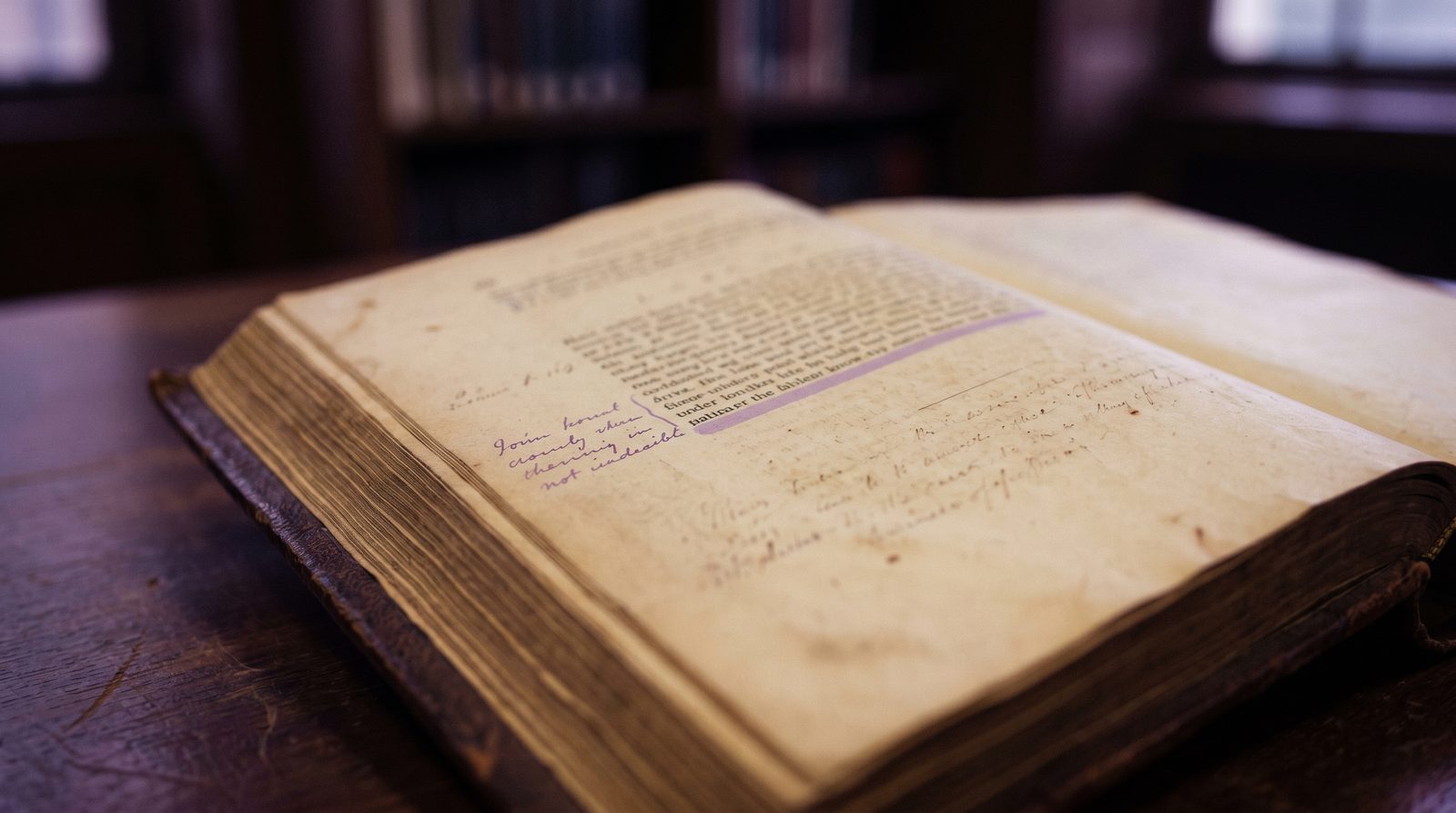
You finish a book. It genuinely moved you. A few weeks pass, someone asks how it was, and all you have left is a vague feeling and a sentence or two. That paragraph you underlined, the note you scribbled in the margin, both already gone.
This is not a personal failing. It is how human memory works. But it is something you can change. And the fix is not trying harder.
Why do we forget the books we read?
The brain quickly discards information it does not revisit or use. The German psychologist Hermann Ebbinghaus measured this with experiments he published in 1885. The curve he drew is now called the forgetting curve, and it still holds. Most of what you newly learn fades within days or weeks unless you return to it.
Two things speed this up when you read. First, reading is often a quiet, passive act. Your eyes move across the lines but nothing lands firmly. Second, the valuable part of a book usually fits into a handful of sentences. The rest is context around them. Once you close the book, there is no way to find those few sentences again among hundreds of pages.
So the problem is not a bad memory. The problem is that the record was never made.
Remembering is a matter of capture, not memory
Nobody holds everything they read in their head. Nobody needs to. What good readers do is simpler. They do not try to remember. They capture.
When a sentence stops you, you put it somewhere in that moment. You do not strain to keep it in mind. You leave it in a reliable place outside your mind. That frees your memory and you keep reading. When you want to come back, the trace is there.
This idea is not new. It has had a name for centuries.
The commonplace book, a centuries-old solution
Since the Renaissance, readers have kept what is called a commonplace book. It is a personal notebook for gathering striking quotes, ideas and observations from their reading. The philosopher John Locke developed a method for indexing them and published it back in 1686. Making knowledge findable again was already a problem then.
The logic still holds today. The book you read is not yours, but what you take from it is. A commonplace book collects those takings in one place. Over time it becomes something far more valuable than a list of books read. It becomes a map of your own thinking.
The only catch is that a paper notebook is laborious in practice. Copying quotes by hand is slow. Your handwritten margin notes stay trapped in the book. And ten years later there is no way to search for which book a line came from.
We wrote about the notebook's history, Locke's indexing method and how to keep one today in a separate piece.
A practical way to save quotes in the digital age
A good reading-capture habit has three core traits.
It has to be fast. If saving a quote interrupts your reading and feels like work, you will eventually stop doing it. Capture has to be easy enough not to break the flow of reading. A few seconds is ideal.
It has to keep the context. A bare sentence loses its meaning months later. Which book and page it came from, and the note that crossed your mind at the time, are as valuable as the quote itself.
It has to be searchable. The whole point of a record is being able to return to it. If you cannot find a half-remembered line with a single search half a year later, the record has not done its job.
In practice this means keeping a tool next to the book. For most of us that tool is already in our pocket. The phone. Photographing a page is far faster than copying it by hand. And the photo preserves your highlight and your margin note exactly as they are.
How PALIMPS makes this habit effortless
PALIMPS was built to bring exactly these three traits together. You photograph a page. AI reads the quote, the highlight and the handwritten margin note separately. Each page is saved as a moment with its own short summary and tags. Book title, author, quote, note. You browse all of it with a single search.
No ads. Your reading memory is yours, and you can export it as a PDF whenever you like. In short, it is the centuries-old commonplace book idea in a form that does not interrupt your reading.
Because the point was never to read more books. It is to let the books you read stay with you.